
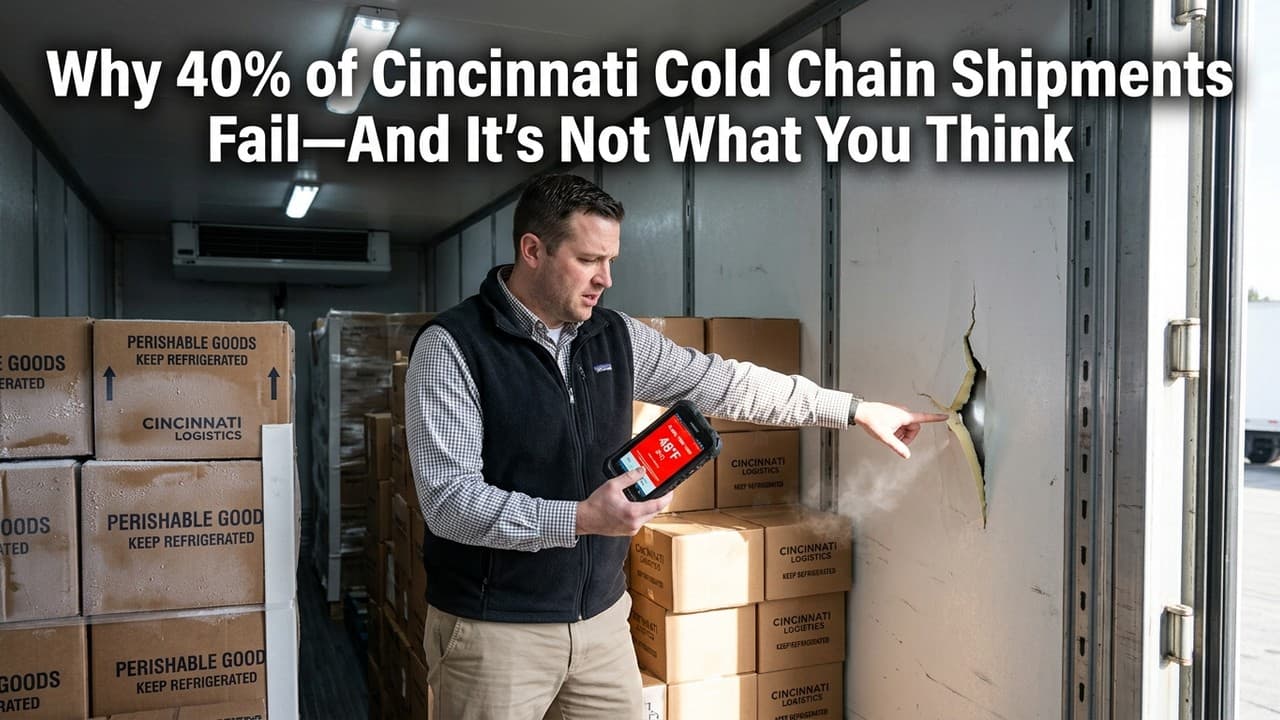
Your Refrigerated Shipment Arrived Warm: But Why?
The call comes in at 8:47 AM. Your customer in Louisville just rejected a full truckload of frozen vegetables because the product arrived at 38 degrees instead of the required -10 degrees. Twenty-four pallets of premium produce, now worthless. Your customer won't pay the $15,000 invoice, and you're left scrambling to explain what went wrong to your own suppliers.
This scenario plays out hundreds of times each week across Cincinnati's food distribution corridors. Refrigerated freight transportation Cincinnati companies handle moves through some of the busiest cold chain routes in the Midwest, connecting local food processors to national markets. Yet temperature failures continue to blindside shippers who thought they had reliable carriers.
Here's what most Cincinnati shippers don't realize: temperature breaks aren't random accidents. They're the predictable result of three specific failures that can be identified and eliminated before your next shipment leaves the dock. Equipment gaps, driver training gaps, and visibility gaps cause 90% of cold chain failures, but each one has a proven solution.
The difference between a successful cold chain operation and a costly disaster comes down to understanding these three causes and demanding accountability from every carrier you use. When you know what to look for and what to require, temperature-controlled shipping becomes as reliable as any other freight movement.
The Three Hidden Causes of Cold Chain Failures
Most shippers assume their refrigerated carrier has the basics covered, but cold chain failures reveal three consistent weak points that destroy temperature-sensitive loads.
Equipment failure tops the list. Trucks that haven't been properly pre-cooled, reefer units with faulty thermostats, or trailers with door seals that leak cold air create temperature spikes that ruin entire shipments. The FDA's FSMA rule requires refrigerated freight equipment to be clean and pre-cooled, with temperature logs maintained throughout transit, yet many carriers still dispatch trucks without proper equipment verification. A reefer unit that reads 34 degrees at pickup but climbs to 45 degrees during transit indicates equipment problems that should have been caught during pre-trip inspection.
Driver training gaps create the second major failure point. Operators who don't understand cold chain protocols make decisions that compromise temperature integrity. Opening trailer doors for extended periods during delivery, failing to monitor temperature alarms, or not understanding the difference between frozen and refrigerated requirements leads to product loss. Refrigerated freight transport risks include temperature-control-specific issues that require drivers trained beyond standard CDL requirements.
Visibility gaps represent the most frustrating cause because they leave shippers blind to problems until it's too late. Without real-time temperature monitoring, you have no way to know if a temperature break occurred during transit, when it happened, or what caused it. Traditional carriers provide temperature logs only at delivery, giving you historical data when you need real-time alerts. This lack of visibility means problems go undetected for hours or days while your product deteriorates in transit.
FDA FSMA Rule: What Compliance Actually Requires
The FDA's Food Safety Modernization Act transformed cold chain accountability from industry best practices into federal law. Understanding what compliance actually requires helps Cincinnati shippers separate serious carriers from those cutting corners on temperature-controlled operations.
FSMA mandates specific requirements for refrigerated freight: equipment must be clean and properly maintained, trucks must be pre-cooled to required temperatures before loading, temperature logs must be maintained throughout transit, and staff must be trained on cold chain protocols. These aren't suggestions or industry recommendations but federal requirements that carry real consequences. Non-compliance with refrigerated freight regulations can result in fines or rejected shipments that cost shippers thousands of dollars in lost product and damaged customer relationships.
The rule also requires documentation proving compliance at every step. Carriers must provide evidence of equipment cleaning, pre-cooling verification, continuous temperature monitoring, and driver training records. This documentation becomes crucial when temperature failures occur because it establishes whether the carrier followed required protocols or cut corners that led to product loss.
Smart Cincinnati shippers use FSMA compliance as a carrier qualification tool rather than viewing it as additional paperwork. Carriers who can demonstrate consistent compliance have systems and training that prevent temperature failures. Those who can't provide compliance documentation signal higher risk for your temperature-sensitive freight.
Real-Time Temperature Monitoring: The Game Changer
Technology has finally solved the visibility problem that plagued cold chain shipping for decades. Real-time temperature monitoring systems like our Veri5 System provide continuous data streams that eliminate the guesswork from refrigerated freight transportation Cincinnati operations.
The system works by placing sensors inside trailers that transmit temperature readings every few minutes throughout transit. Instead of waiting until delivery to discover temperature problems, you receive immediate alerts if readings move outside acceptable ranges. This real-time visibility allows for immediate intervention when problems occur, often saving loads that would otherwise be lost to temperature breaks.
Data logs from every shipment provide accountability that protects both shippers and carriers. When temperature-sensitive freight arrives in perfect condition, the logs prove the carrier maintained proper temperatures throughout transit. If problems occur, the data shows exactly when temperature breaks happened and how long they lasted, eliminating disputes about responsibility for product loss.
The technology also enables proactive management that prevents problems before they become disasters. Temperature trends that indicate equipment problems can be identified early, allowing carriers to adjust routes or dispatch replacement equipment before product is compromised. This level of oversight transforms refrigerated shipping from a leap of faith into a managed process with measurable outcomes.
How to Choose a Reefer Carrier in Cincinnati: A Vetting Checklist
Selecting the right refrigerated carrier requires looking beyond basic capacity and rates to evaluate cold chain capabilities that protect your temperature-sensitive freight. Nick Pharo, our President and University of Cincinnati Master's graduate who built Gateway's quality-focused culture, emphasizes that carrier relationships built on accountability start with thorough vetting of cold chain competencies.
Equipment certifications provide the foundation for reliable temperature control. Verify that carriers maintain current DOT inspections, reefer unit maintenance records, and temperature calibration certificates for monitoring equipment. Ask for documentation showing pre-cooling procedures and equipment cleaning protocols that comply with FDA FSMA requirements.
Driver training records reveal whether operators understand cold chain protocols beyond basic freight handling. Look for carriers who provide specialized training on temperature monitoring, proper door management, and emergency procedures for equipment failures. Drivers who understand the science behind temperature control make better decisions that protect your product during transit.
Technology integration capabilities determine your visibility into shipment conditions. Require carriers to provide real-time temperature monitoring with data logging capabilities rather than accepting end-of-trip temperature reports. The ability to track temperature conditions throughout transit separates professional cold chain operators from standard freight carriers offering refrigerated services.
FDA compliance history and references from other temperature-sensitive shippers provide insight into operational reliability. Carriers with consistent compliance records and satisfied customers demonstrate the systems and culture needed for successful cold chain operations. This vetting process takes time upfront but prevents costly failures that damage your customer relationships.
Protect Your Next Cold Chain Shipment: What to Do Now
Cincinnati shippers can eliminate temperature-related product loss by implementing three immediate changes to their refrigerated freight operations. These steps transform cold chain shipping from a risk management challenge into a controlled process with predictable outcomes.
First, demand real-time temperature monitoring for every refrigerated shipment you book. Refuse carriers who only provide end-of-trip temperature logs because this approach leaves you blind to problems until it's too late to intervene. Real-time monitoring with immediate alerts allows you to address temperature breaks before they destroy your product.
Second, verify FDA FSMA compliance before booking any temperature-controlled freight. Ask carriers to provide documentation of equipment cleaning, pre-cooling procedures, driver training records, and temperature monitoring capabilities. Carriers who can't demonstrate compliance create liability risks that far exceed any potential cost savings.
Finally, partner with logistics providers who specialize in cold chain accountability rather than treating refrigerated freight as an add-on service. At Gateway Logistics, we manage temperature-sensitive shipments one shipment at a time using our Veri5 System to ensure every load receives the attention needed for successful delivery. Our vetted carrier network includes only operators who meet strict cold chain standards and provide the documentation needed for complete supply chain transparency.
The difference between successful cold chain operations and costly failures comes down to working with partners who understand that temperature control requires specialized systems, training, and technology. Contact Gateway Logistics today to discuss how our refrigerated freight solutions can protect your temperature-sensitive shipments with the accountability and visibility your business demands.